

When I was diagnosed over a year ago now, it hit me like a brick wall. Nobody seeks a diagnosis of autism or ADHD for fun, they do it because they are suffering and don’t know why. In my case I had been struggling in all areas of my life and would often sit on the couch and comment to my partner that I might be on the spectrum, before quickly dismissing it as silly talk.
When I hit that brick wall I had to retreat completely from everything, now I never really did much, simple pleasures. However the thought of logging into work and doing the highly technical role and joining meetings was too much. It would turn out to be a 6 month hiatus from my job. I was very lucky to have full pay at my job for those 6 months and I could have had another 6 months at half pay, however reality kicked in and I had to go back.
The return was phased, I used a third of my holidays to do a very slow return. However I was never really out of burnout, I’m still not. I would struggle daily to show up, attending calls and investigating technical issues with our digital estate. I would have to lay down and could easily go into a meltdown and/or shutdown.
The hardest part was the fatigue, it was unlike anything I’d ever felt before. My father when I was younger had ME and my daughter when she was younger had Chronic Fatigue Syndrome. It felt like that, a level of tired in your very bones. I’m not directly comparing them, but only to say that I had seen what extreme fatigue looked like and this felt similar.
Now as my ex-therapist will tell you, I’m very curious about researching health, supplements and ways to improve yourself. Now I’m not selling anything here, this is simply a story of where I’m at and how I got there. My curiosity was, what if that tiredness was at the cellular level. What if my body just didn’t know how to create energy any more. What if those 6 months I’d had off and the retreating had made it worse, after all what did I need energy for if I spent most of the day in bed or on the couch.
I started investigating what supplements I could take that would help with mitochondrial repair. My goal was to find supplements that would work at the cellular level, would not cost the earth and that I could find high quality sources for. If your at all curious this is my current stack that I’m taking. Don’t read too much into the dosages, this was a mix of research and availability.
On waking:
| Supplement | Dose | Mitochondrial / Mechanistic Effect | Cycling |
|---|---|---|---|
| NADH | 20 mg | Direct electron donor to Complex I of the ETC; the reduced form of NAD⁺, feeding oxidative phosphorylation at the top of the chain | Daily |
| L-Tyrosine* | 1000 mg | Precursor to dopamine and noradrenaline; supports catecholamine synthesis for focus and drive | Cycled |
| ALA (Alpha-Lipoic Acid) | 650 mg | Dual water/fat-phase antioxidant; recycles other antioxidants (C, E, glutathione) and supports mitochondrial energy metabolism | Daily |
With breakfast:
| Supplement | Dose | Mitochondrial / Mechanistic Effect | Cycling |
|---|---|---|---|
| CoQ10 | 200 mg | Electron carrier in the ETC (Complex I–III); supports ATP synthesis and acts as a membrane antioxidant | Daily |
| Alpha GPC* | 600 mg | Choline donor → acetylcholine synthesis; supports phospholipid repair in neuronal membranes | Cycled |
| Acetyl-L-Carnitine | 500 mg | Shuttles fatty acids into mitochondria for β-oxidation; donates acetyl groups for acetyl-CoA and acetylcholine | Daily |
| Omega-3 | 1000 mg | Incorporates into mitochondrial membranes, improving fluidity; anti-inflammatory signalling (resolvins) | Daily |
| Vitamin B12 | 1000 µg | Cofactor in methylation and the TCA cycle; supports myelin and red blood cell formation | Daily |
| Vitamin D3 / K2 | 100 µg | Regulates gene expression incl. mitochondrial biogenesis; K2 directs calcium metabolism | Daily |
| Creatine | 3.3 g | Buffers cellular ATP via the phosphocreatine system; rapid energy regeneration in muscle and brain | Daily |
With lunch
| Supplement | Dose | Mitochondrial / Mechanistic Effect | Cycling |
|---|---|---|---|
| Shilajit | — | Fulvic acid complex; supports mitochondrial electron transport activity and nutrient cofactor supply | Daily |
| Vitamin C / Zinc | 1000 mg / 10 mg | Water-phase antioxidant protecting mitochondrial contents from ROS; zinc supports mitochondrial enzyme function | Daily |
| Boron | 5 mg | Involved in mineral metabolism and steroid hormone binding; indirect role in energy metabolism | Daily |
| Selenium | 200 µg | Cofactor for glutathione peroxidases — protects mitochondrial membranes from lipid peroxidation | Daily |
| Cordyceps / Vitamin B5 | 800 mg / 6 mg | Supports oxygen utilisation and aerobic ATP turnover; B5 is required for Coenzyme A (central to the TCA cycle) | Daily |
At night time
| Supplement | Dose | General Effect | Cycling |
|---|---|---|---|
| Magnesium (4-in-1) / L-Leucine | 1000 mg (elemental 400 mg) / 90 mg | Muscle relaxation, nervous system calming, sleep quality; leucine supports overnight protein synthesis | Daily |
| L-Theanine* | 400 mg | Promotes alpha-wave relaxation without sedation; reduces subjective stress | Cycled |
| Apigenin* | 100 mg | Gentle anxiolytic/sedative effect; also studied for NAD⁺ conservation via CD38 inhibition | Cycled |
* Cycled supplements — Alpha GPC, L-Theanine and Apigenin can each cause anhedonia with continuous use so they’re taken in cycles with regular breaks rather than daily. I had a bad case of anhedonia that passed quickly after I cycled off these for a few days.
Now I know what your probably thinking, that must cost a fortune. It’s true, it is not cheap. However in many cases you can buy these in 3-6 month supply’s. I also made sure that I only ordered from companies with independent lab testing. That was actually much harder than it seems, but if your paying for this you want quality. Maybe I’ll share those details in another post at some point but I don’t want this post coming across as promotional. As for the money, I’m in a lucky position where I can afford it, that being the case I’m happy to invest in a potential recovery no matter the cost.
The one supplement in the stack I want to single out is CoQ10. It’s probably the most researched of the bunch when it comes to neurodivergent benefits. There’s a randomised controlled trial where CoQ10 added to ADHD medication improved symptoms, particularly hyperactivity, over six months compared to placebo. Studies in autistic children have shown it can reduce markers of oxidative stress, and pilot trials of it in various forms have reported improvements in communication and behaviour. None of this is proof it treats autism or ADHD as the trials are small, mostly in children, and I’m a middle-aged man taking it for energy, not as a treatment. But of everything on my shelf, it’s the one with the most interesting signal in the literature for brains like ours. I take a naturally fermented ubiquinone form with breakfast, fat helps absorption, and fermented ubiquinone is the same form used in much of the clinical research.
While those supplements were helping, it was not enough. So I added a second layer of protocols to my attempts to regain some of my life. I’d bought a cold-plunge a while back and was testing how that affected the energy levels. I found it very useful when my autistic self entered a shutdown or was close to meltdown as it helped to shake me out of that, but something happened that made me stop for now. I’ll cover that in more detail in another post.
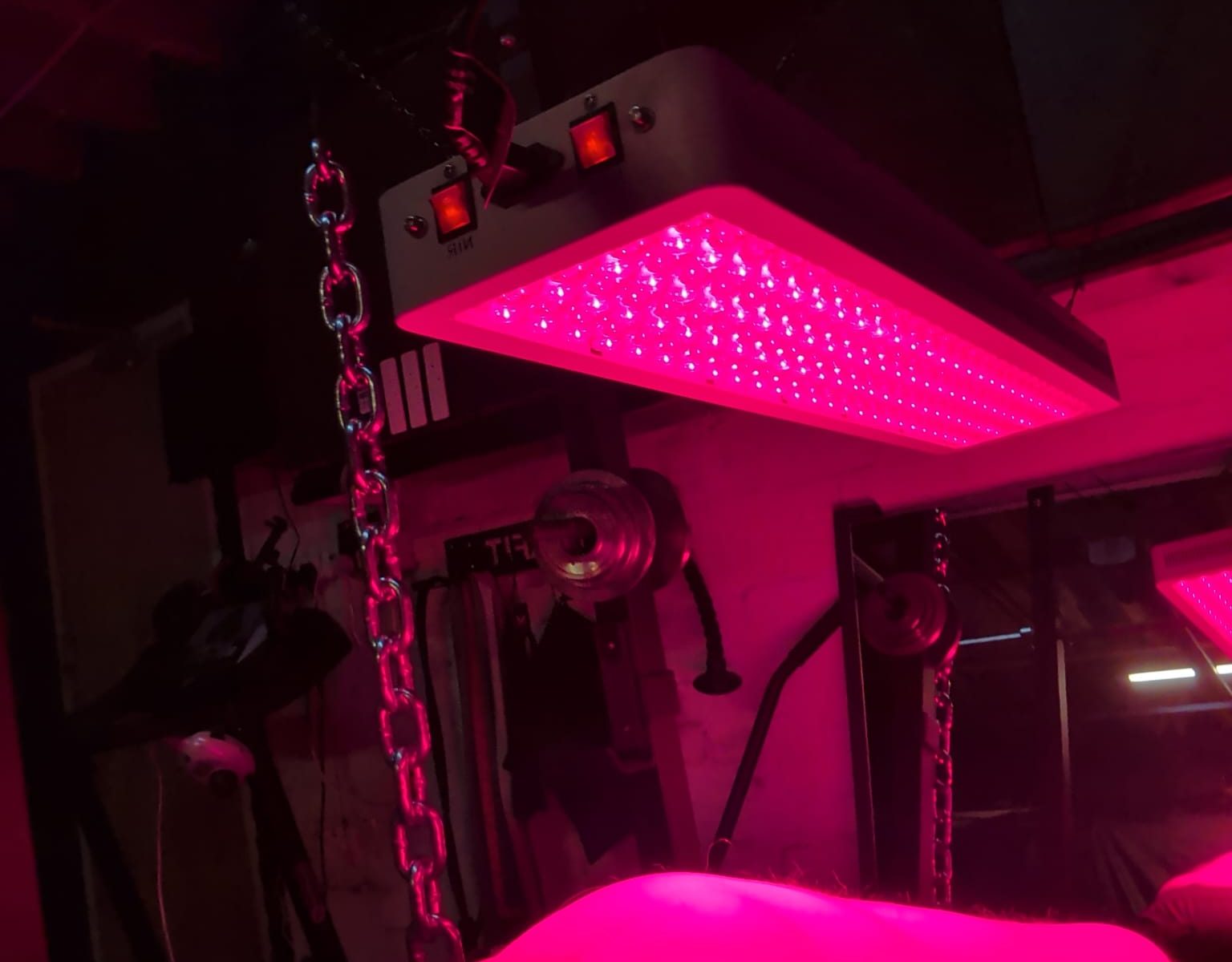
What has helped however is using a red light and near infrared panel. I had read some research about how this can be helpful for recovery for athletes and also some studies about transcranial photobiomodulation (tPBM) and how it has in studies helped with autistic behaviours.
 However this was more focused still on the mitochondrial energy levels. I was using it sparingly for about 10 minutes a couple of times every week. Then one day I did a longer 20 minute session and it was a dramatic improvement in how it made me feel. I sat back in the usual armchair and started to notice I was feeling energised. If I recall correctly I believe I took the dogs for a walk. If your in burnout it’s always a bit of a tight-rope walk, you have energy but you don’t want to push too far. Now don’t get me wrong, I’m still very fatigued most of the time, I’m still in burnout, that has not changed. However I need to lay down less during the day.
My currently protocol is each lunch time I will lay down with my panel (Which I bought off ebay for around £200) hanging above me, I do this for about 20 minutes. I will then grab some dumbbells and do a very quick 2 minute workout, literally 2 sets of 8-12 presses/curls. My thinking being that if I can stimulate the mitochondrial energy system, then put it under stress that it feels the body needs that energy it will make it more sustainable. However I’m careful not to over-do it at this stage and cause even worse fatigue, just enough to make the body think it should be creating energy.
 At present I also use a vagus nerve stimulator at the same time, that’s more to help with calming myself during the working day. I’ll cover that in more detail in another post. Meantime know that putting on the radio and doing some singing, humming or some simple meditation does the same in theory.
I’m writing this post at 4pm after a session earlier, where I feel like I have some energy. However knowing how AuDHD works, I may crash again any minute. I’ve been playing music all day which has also helped, the fact I am so lucky to work from home permanently is not lost on me.
I am trying to eat healthier, lose some weight (AuDHD emotional eating says hello) and I’m about to go back on ADHD meds in a few days. But those are all stories for another day. For now, I continue to experiment with ways to get back some of my energy levels.
Now do I want to take my dogs out for a walk? Maybe, but that might mean a social situation of bumping into someone. The neurodivergent burnout journey is a complex one, one day at a time.